DEIB Without Cultural Intelligence Is a Policy, Not a Practice
DEIB programs fail across cultures without cultural intelligence. Research shows inclusion works as daily communication practice, not values statements.
By Jay Vergara
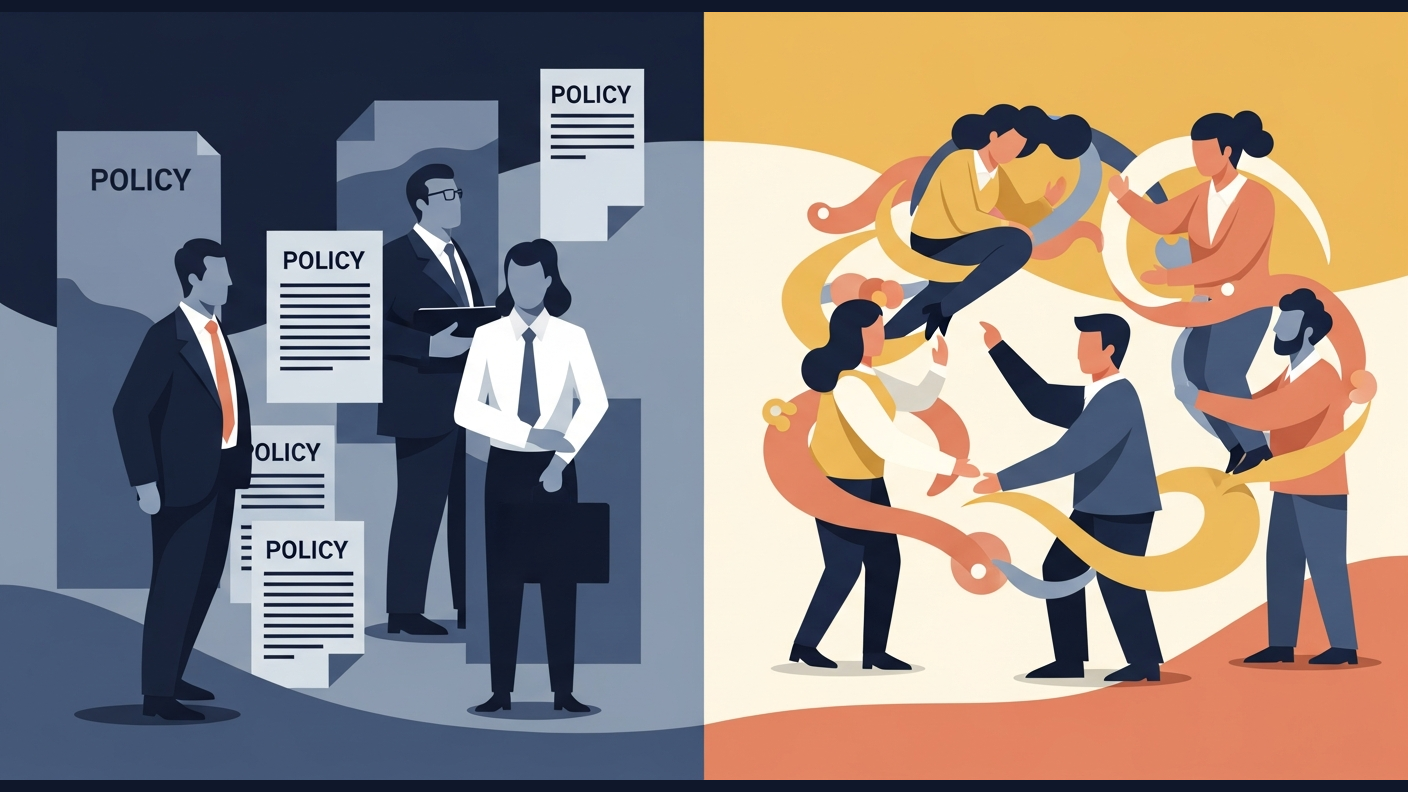
Inclusive leadership is a set of behaviors designed to help team members feel they belong to a group while also feeling valued for what makes them unique, a framework established by Randel et al. (2017). The growing body of evidence shows those behaviors only produce genuine belonging when they are calibrated to the cultural context in which they land.
A company has solid DEIB commitments, leadership training, and stated values around psychological safety. The globally distributed team still has quiet people who check out, regional gaps that keep reappearing in engagement data, and a creeping sense that something isn’t reaching everyone equally. The standard response is to reinvest in the values, another all hands, another bias training. The values aren’t usually the issue. ‘Inclusion’ simply doesn’t travel across cultures on autopilot, and the research has gotten quite specific about what carries it across.
The same behavior, opposite effects
A research synthesis of 105 independent samples covering 39,948 employees found that inclusive leadership consistently predicts task performance, creativity, voice behavior, and lower turnover, with psychological safety as the central mechanism (Li et al., 2024). Every L&D professional in the room nods at that instantly. Of course psychological safety matters.
The piece that gets skipped is that psychological safety isn’t experienced the same way everywhere. In a collectivist, high context culture, staying quiet in a meeting isn’t a signal that safety is low. It’s a signal that the person reads professional norms differently. A leader doing everything “right” by their own cultural standard, paired with a team member who will never raise their hand publicly, are caught in a communication gap that everyone in the room is misreading as a safety failure.
What ‘cultural intelligence’ is actually doing
The data on ‘cultural intelligence’ is fairly unambiguous. A pooled analysis of 70 studies covering 18,359 participants found that CQ correlates with job performance at ρ = .47, and it adds meaningful predictive power beyond personality, emotional intelligence, cognitive ability, and years of international experience (Schlaegel et al., 2021). That last part is worth sitting with. Experience alone doesn’t build CQ. It has to be developed deliberately, which is the whole premise behind structured cross cultural training.
When teams lack it, things break in specific ways. A study of 810 participants across 232 global virtual teams from 38 countries found that low CQ directly links to higher process conflict, meaning disagreements about decision rights, workflow ownership, and whose communication style becomes the default norm for the team (Davaei et al., 2022). Process conflict, more than interpersonal friction, is what tanks team performance. Most DEIB programs are trying to solve a CQ problem with a values intervention. Values matter, but they are not sufficient on their own.
CQ as the operating system underneath the values
‘Cultural intelligence,’ or CQ, is the ability to function effectively across different cultural contexts. Think of it less like a skill and more like an operating system. You can install the right values (the apps), but if the underlying OS cannot run them in unfamiliar environments, the apps crash. No amount of clicking the icon fixes that. (Slightly too literal a metaphor, but it’s accurate.)
CQ has four dimensions: metacognitive (thinking about how you think across cultures), cognitive (knowing how cultures differ), motivational (wanting to engage across difference), and behavioral (actually adapting how you communicate). The Schlaegel et al. (2021) synthesis found these dimensions work together in a mutually reinforcing cycle, and motivational CQ has the largest unique effect on job performance at 22% of variance.
The most useful question isn’t “does your leader know the cultural facts?” It’s “does your leader actually want to understand how people from different backgrounds experience the team?” Curiosity and tolerance are not the same thing, and teams feel that difference immediately.
Why the same gesture lands so differently
The Randel et al. (2017) framework is clear that inclusive leadership isn’t only about what leaders do. It’s about whether those behaviors register as inclusive for the person receiving them, filtered through the receiver’s cultural frame. Asking for input publicly feels inclusive to someone from a direct, low context communication background. For someone from a high context background, it can feel like being put on the spot in front of the group. Same behavior, opposite effect.
Inclusion is felt, not declared. The organizations that get this right treat inclusion as a daily communication practice rather than a values statement, and the difference is visible in their engagement data within months.
Four leverage points
Audit your “inclusive” behaviors for the cultural assumptions built into them. Ask which practices assume that directness, public participation, and individual acknowledgment are universally valued, then build alternative channels alongside them. Bilateral check ins and async contribution options are inclusion design, not accommodations for introverts.
Build CQ into DEIB programs as a prerequisite, not a supplement. The Schlaegel et al. (2021) data shows CQ adds predictive power for performance beyond personality, experience, and IQ combined. Start with motivational CQ. Help leaders develop genuine curiosity about cultural difference, rather than jumping straight to formal awareness of it.
Treat process conflict as a DEIB signal. Davaei et al. (2022) found that process conflict, more than interpersonal friction, is what kills global team performance. When your team fights over workflow defaults and decision rights, that is often a sign one cultural norm is running the room unchecked, and the inclusion conversation needs to happen upstream of the surface argument.
Separate ‘belonging’ from ‘sameness’ in how you design for inclusion. The Randel et al. (2017) model says inclusive leadership serves two things: belonging (I’m part of this team) and uniqueness (I’m valued for what makes me different). A lot of programs focus almost entirely on belonging and skip uniqueness, especially when uniqueness is cultural. Naming specific cultural contributions in concrete terms is what closes that gap.
What this all comes back to
‘Inclusion’ might be one of those words we’ve defined carefully in one cultural register and then assumed travels everywhere without friction. Belonging is felt, not declared. What makes someone feel seen is shaped by decades of cultural formation that no values statement overrides on its own.
The research doesn’t say DEIB doesn’t work. It says cultural intelligence is what makes it work when the team spans cultures. That isn’t a small distinction.
What’s one “inclusive” practice on your team that you’ve never actually tested across cultural contexts?
If you want to take this conversation somewhere more concrete, I work with organizations on exactly this intersection at peakpotentialconsulting.com/services/team-workshops. You can also reach me directly and we can work through what this looks like for your team.
Frequently Asked Questions
Q: What’s the difference between DEIB and cross cultural communication?
DEIB is a strategic and values driven framework for building equitable, inclusive organizations. Cross cultural communication is the practical discipline of understanding how cultural context shapes the way people send, receive, and interpret messages. They are deeply connected because inclusion as a value only produces belonging as a felt experience when the communication practices delivering it actually land across cultural differences. One without the other is incomplete.
Q: How can leaders make their inclusion behaviors more culturally effective?
Start by auditing which of your practices assume a low context, direct communication default. Public participation requests and open floor discussions are inclusive for people who share that norm and can feel exposing for those who don’t. Adding bilateral conversations, async input, and written contribution options is more sophisticated design rather than accommodation, because it doesn’t penalize people for communicating the way their culture shaped them.
Q: Isn’t diversity training enough to address cross cultural inclusion gaps?
Not on its own. Most diversity training focuses on bias awareness and values alignment, which are important but separate from the operational skills needed for inclusive communication across cultural differences. The Schlaegel et al. (2021) data shows ‘cultural intelligence’ predicts job performance and adjustment beyond personality, IQ, and international experience. These skills need to be built deliberately, rather than stated as organizational values and assumed to follow.
Q: What measurable outcomes improve when teams combine inclusive leadership with cultural intelligence?
The Li et al. (2024) synthesis of 39,948 employees found inclusive leadership predicts higher task performance, creativity, innovation, voice behavior, and lower turnover intention. The mechanism runs through psychological safety, which is itself shaped by whether inclusive behaviors actually register as safe within a person’s cultural frame. Teams that build both inclusive leadership and CQ tend to see gains across both the people outcomes and the performance metrics.
Sources
- Li et al. (2024). Implications of Inclusive Leadership for Individual Employee Outcomes: A Meta-Analytic Investigation
- Randel et al. (2017). Inclusive Leadership: Realizing Positive Outcomes Through Belongingness and Being Valued for Uniqueness
- Schlaegel et al. (2021). Cultural Intelligence and Work-Related Outcomes: A Meta-Analytic Examination
- Davaei et al. (2022). The Influence of Cultural Intelligence and Emotional Intelligence on Conflict Occurrence and Performance in Global Virtual Teams

by Jay Vergara
Partner, Lead Learning Consultant at Peak Potential Consulting
L&D strategist and cross cultural communication specialist helping organizations build leaders, teams, and learning cultures that work across borders. Currently pursuing his MBA at GLOBIS University in Tokyo.