Why Your AI Rollout Is Creating More Work, Not Less
Adding AI tools faster than your team can learn them doesn't boost productivity. The research shows it creates invisible rework instead.
By Jay Vergara
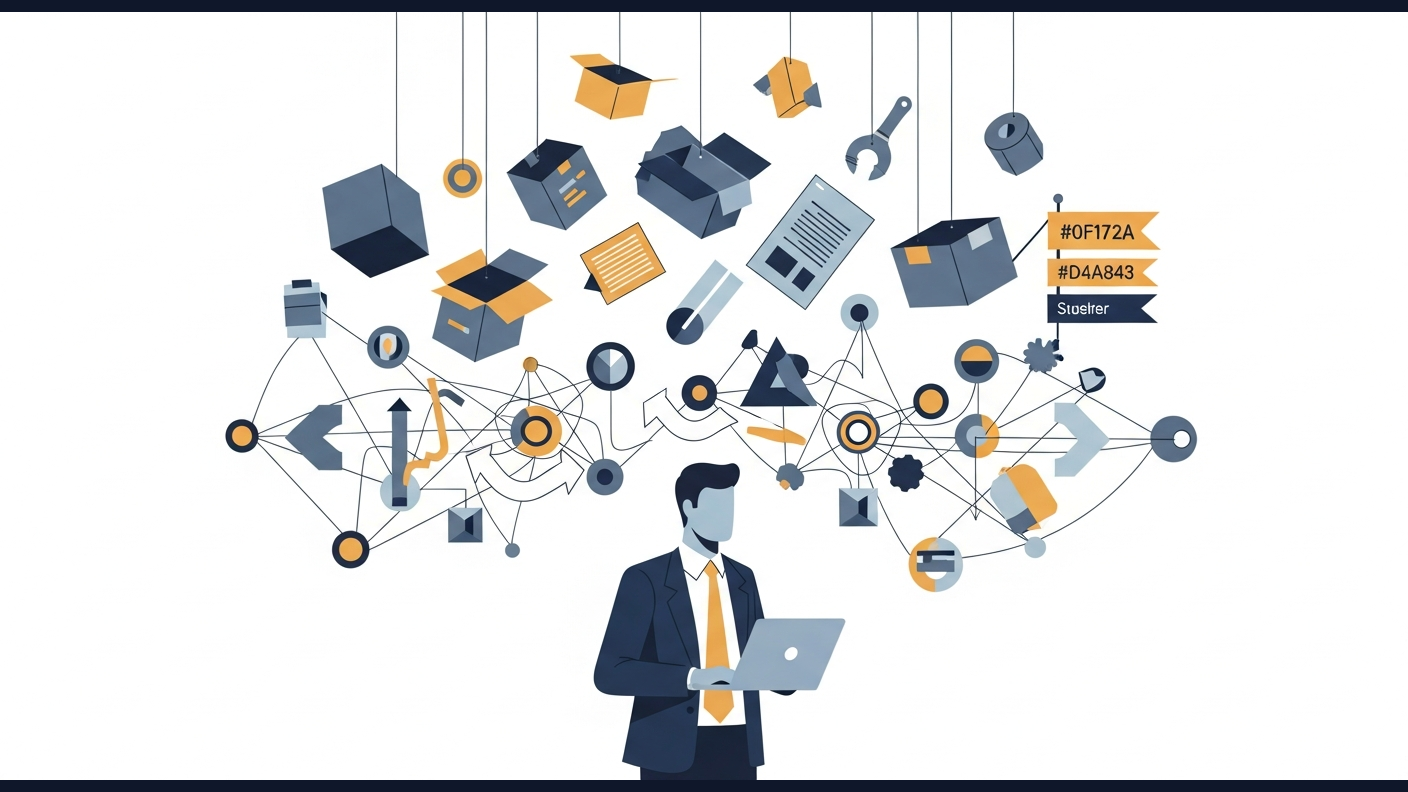
The productivity gains companies expected from AI deployments haven’t materialized in most organizations, and the research now shows why. When employees use four or more AI tools without dedicated training, productivity drops rather than climbing. Adoption and capability turn out to be very different things, and most companies funded the first while quietly assuming the second would happen on its own.
A Boston Consulting Group study of nearly 1,500 workers found exactly that pattern. More tools meant worse output. Researchers are calling the cognitive overload it produces “AI brain fry,” and the name is too accurate to ignore. An eight month UC Berkeley study of a 200 person tech firm reached the same conclusion: AI tools increased employee workload and acted as a net drag on efficiency. The tools were doing something. They just weren’t doing what executives announced they would do at the all hands meeting.
The gap is structural. Only one in four workers receives any formal AI training from their employer, and HBR research shows that 60% of organizations are still in the experimental phase with AI while simultaneously asking their people to use these tools daily. The chasm between “we deployed it” and “our team uses it well” widens every quarter that nobody decides to bridge it.
What ‘workslop’ actually costs you
A newer term in workplace research captures what this looks like on the ground. ‘Workslop’ describes the flood of AI generated content that looks polished on the surface but needs significant human cleanup before it can be used. 66% of workers report spending six or more hours every week fixing AI errors. That is a full workday of invisible rework, every single week, that no productivity dashboard is measuring.
The cost of an untrained AI rollout shows up as invisible labor your highest performers absorb. The dashboard never sees it.
Tools produce volume and humans produce quality, so the ratio between those two decides whether the rollout pays off. Without that ratio in your favor, you’ve bought speed at the cost of trust.
What the rollouts that work do differently
I think most organizations skip the audit step that would tell them what is actually happening on the ground. Before another AI tool gets announced, find out how many tools your team already juggles and how confident they feel with each one. The answer is usually some version of “more than we can keep track of and not very confident with most of them.” That answer is your starting point, and it makes a far better brief for a hands on AI workshop than any vendor roadmap will.
Bring L&D into the conversation before the contract is signed. Right now the AI strategy meeting happens without an L&D person in the room, then the L&D team hears about the new tools months later and tries to build training retroactively for something already woven into daily workflows. The companies getting real value from AI invite L&D to design with them, not clean up after them.
Measure rework, not just speed. Speed is the easiest metric to claim and the hardest to trust. If your team is producing faster but spending hours correcting AI output, the labor has just shifted from generation to verification, and verification rarely shows up in anyone’s quarterly numbers. Organizations that track rework explicitly catch adoption problems months earlier than organizations that only track output volume.
Normalize not knowing. A lot of the cognitive overload reported in the brain fry research is driven by the social pressure to look competent with tools people were never properly trained on. A team that can say “I don’t know how to use this well yet” learns faster than one quietly drowning while pretending otherwise. ‘Psychological safety’ isn’t a soft topic in AI rollouts. It’s the precondition for the learning curve you want.
The organizations that will get the most out of AI over the next few years are the ones where somebody stopped and asked the obvious question: do our people actually know how to use this? Obvious questions tend to be the ones that don’t get asked, because asking them implies the rollout might already be in trouble, and nobody wants to be the person who says that out loud.
What does your team’s relationship with AI training look like right now? Designed for, or hoped for?
At Peak Potential, we help organizations design AI rollouts that actually stick, with training architecture, role redesign, and the kind of psychological safety that turns tool access into real capability. If your team is drowning in tools that were supposed to give them time back, let’s talk.
Frequently Asked Questions
Q: Why is adding more AI tools sometimes making teams less productive?
A 2026 Boston Consulting Group study of nearly 1,500 workers found that productivity dropped once employees were using four or more AI tools concurrently. The cognitive load of switching between tools, deciding which one fits a given task, and verifying their outputs adds friction that often outweighs the speed gains.
Q: What is workslop and how do you spot it?
‘Workslop’ is a workplace research term for AI generated output that looks finished but isn’t. The clearest signal is rework volume. 66% of workers in the Metaintro 2026 study reported spending six or more hours every week correcting AI errors before the output could be used. If your team is fixing AI output more than they are producing original work, workslop has settled in.
Q: How much AI training are most companies actually providing?
Less than one in four workers receives formal AI training from their employer, even as 60% of organizations remain in the experimental phase of AI adoption (HBR, 2026). Most organizations have rolled out tools without rolling out the capability to use them.
Q: What’s the single most overlooked step in an AI rollout?
Auditing what your team already has access to before adding more. Most companies have layered AI tools on top of existing tools without retiring anything, and the cognitive load shows up exactly as the brain fry pattern in the BCG research. A clean audit shows you whether the next tool is closing a real gap or just adding to an unmanaged stack.
Sources

by Jay Vergara
Partner, Lead Learning Consultant at Peak Potential Consulting
L&D strategist and cross cultural communication specialist helping organizations build leaders, teams, and learning cultures that work across borders. Currently pursuing his MBA at GLOBIS University in Tokyo.