Most Training Doesn't Stick. The Fix Takes 45 Minutes.
Most corporate training doesn't change behavior. The research keeps pointing to one missing piece: three short manager conversations that take 45 minutes total.
By Jay Vergara
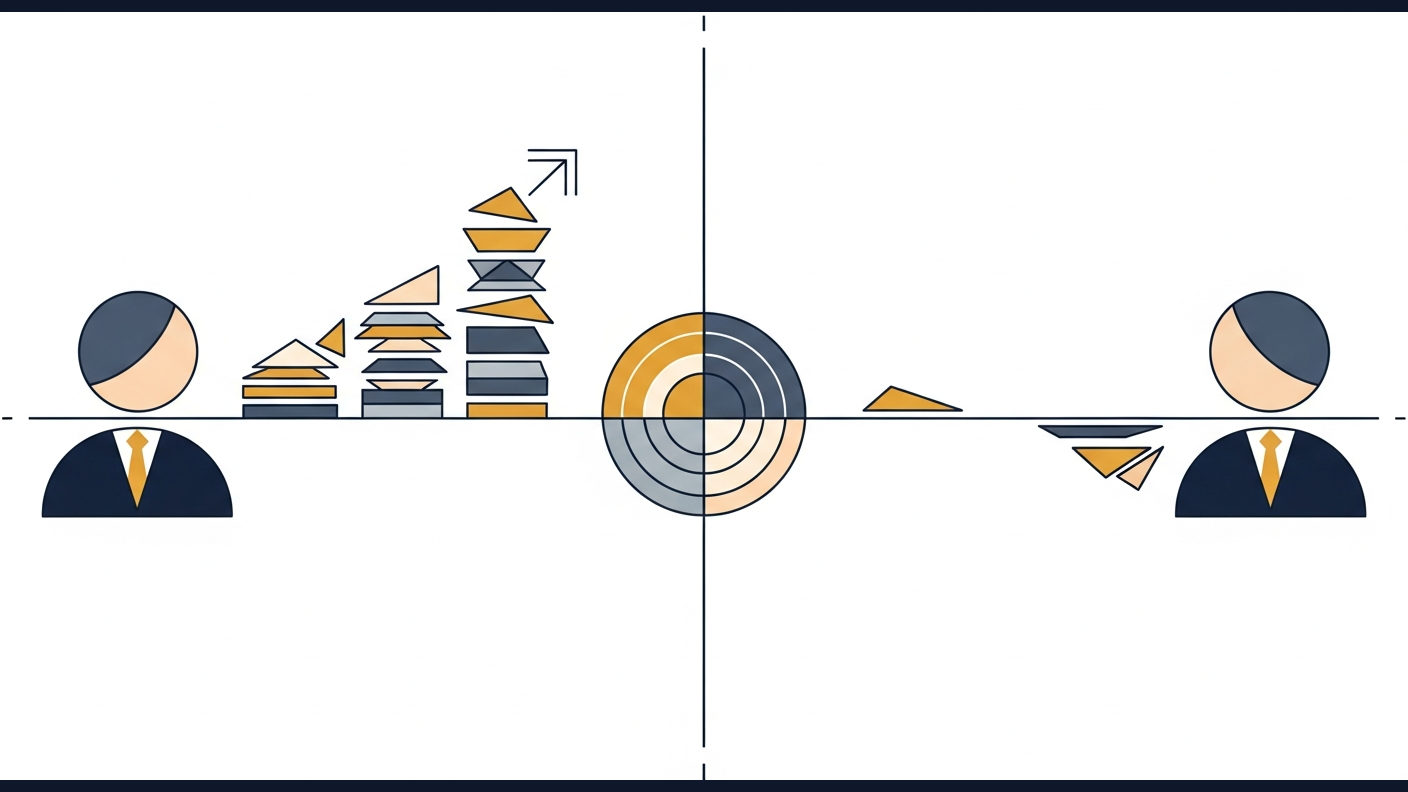
The strongest predictor of whether someone applies what they learned in a workshop turns out to be the conversation that happens before they walk in, not the workshop itself. That finding sits at the center of nearly forty years of training transfer research, and most learning programs still operate as if it weren’t true.
Blume and colleagues (2010) reviewed 89 empirical studies on training transfer in the Journal of Management. They found that a supportive work environment predicts whether learned skills get applied on the job more strongly than training design, instructor quality, or even the motivation of the person in the seat. The environment people return to weighs more than the room they trained in. And that environment belongs to one person: their direct manager.
Why the same program produces different results
Companies pour resources into curriculum design, instructor talent, and venue, then hand the participant back to a manager who has no idea what was covered and no expectation that anything should change. The training survives the workshop and rarely survives the return. Half the participants drift back to old habits within ninety days. A few transform how they work. The variable is almost always the manager waiting in the inbox.
Brinkerhoff and Montesino (1995) ran a controlled study at a Fortune 200 company. They randomly assigned 91 employees across five skill courses to two groups. In one group, managers held a brief conversation before and after the training. In the other, managers said nothing. Same training content, same instructors, same hours invested. The employees whose managers had the conversations reported significantly higher training usage and saw their environment as more supportive of applying what they had learned. The whole intervention took about five minutes per conversation.
The L&D industry has spent decades polishing what happens inside the workshop. The research keeps pointing outside it. Managers are the transfer agents, and most companies treat them like spectators.
A more recent study by Saks and Burke (2012) found that organizations measuring behavior change after training, rather than satisfaction at the end of the day, saw significantly higher transfer rates. Knowing whether the training worked, and asking the right people about it, changes how seriously everyone treats the application step.
Three conversations that change the math
So what should managers actually do? The research keeps pointing to three short conversations and one habit of measurement.
The first conversation happens before training starts and takes about ninety seconds. Ask: “What do you want to get out of this, and how will we use it when you’re back?” That question reframes the experience. The participant stops being a passive attendee and starts being a learner with a target. Most people walk into training without anyone asking this. The few who get the question come back ready to apply something specific.
The second conversation is a real meeting in the first week back, not a hallway exchange. Carve out thirty minutes. Ask “What did you learn, and what’s one thing you want to try this month?” Then help them pick a concrete action and identify what might get in the way. The people who have this conversation are the ones who try the new behavior. The ones who don’t, file their notebook and go back to whatever they were doing before.
The third conversation lands thirty days later and takes two minutes. Circle back with one question: “How’s it going with what you said you’d try?” That’s it. The signal it sends is what matters: that you remember what they learned and you expect them to use it. That signal alone changes behavior.
There’s a fourth piece worth saying out loud. Stop counting seats filled and end of day satisfaction scores, neither of which tells you whether anything changed. Ask instead whether someone behaves differently ninety days later, and build that into how you evaluate every program. Changing that metric is harder politically than it sounds, and it’s why organizations often want outside help redesigning how learning gets measured. Without behavior change as your metric, you cannot claim ROI on the program.
The math on training is rarely as bleak as people think. Most of the investment is salvageable. What gets orphaned is the application step, and the application step is recoverable for the cost of a few minutes per learner. A program that costs three thousand dollars per person and produces zero behavior change costs three thousand dollars per person. The same program with three short manager conversations producing four new behaviors per learner becomes one of the highest return investments a company makes. The training plants something. Whether anything grows depends on whose hands the seedling lands in.
You don’t need to overhaul your entire learning system to fix this. You need a script for managers and an expectation that they use it. Three conversations across roughly forty five minutes per learner. The shift is that small.
When was the last time you asked one of your managers how the training went, in a way that expected a real answer?
At Peak Potential, we help L&D and HR teams build the manager habits that turn training programs into actual behavior change. If your training spend keeps going up but the behavior change isn’t following, let’s talk.
Frequently Asked Questions
Q: Why do so many corporate training programs fail to produce behavior change?
The research consistently finds that training transfer depends more on the post training environment than on the training content itself. Blume et al. (2010) reviewed 89 studies and found that a supportive work environment, especially manager support, was a stronger predictor of applied learning than instructor quality or learner motivation. Most programs invest in the workshop and ignore the return.
Q: What should a manager actually say before someone goes to training?
Ask one question: “What do you want to get out of this, and how will we use it when you’re back?” The intervention is about ninety seconds long but it changes how the participant attends. They walk in with a target instead of just walking in to fill a seat. Brinkerhoff and Montesino (1995) found this single conversation, paired with a brief follow on the other side, significantly raised training usage in a controlled study.
Q: How do you measure whether training actually worked?
Stop measuring with end of day satisfaction surveys. They tell you whether the day was pleasant, not whether behavior changed. Saks and Burke (2012) found that organizations evaluating behavior change after training had significantly higher transfer rates. The right question is whether the learner behaves differently ninety days later, not whether they enjoyed the workshop.
Q: Is forty five minutes really enough manager involvement?
For most skill training, yes. The three conversations break down to roughly ninety seconds before the program, thirty minutes in the first week back, and two minutes at the thirty day mark. The total isn’t impressive on a calendar, but the consistency is what matters. What carries the behavior change is the signal that a manager remembers what was learned and expects it to be used.
Sources
- Blume, B. D., Ford, J. K., Baldwin, T. T., & Huang, J. L. (2010). Transfer of Training: A Meta-Analytic Review. Journal of Management, 36(4), 1065 to 1105.
- Brinkerhoff, R. O., & Montesino, M. U. (1995). Partnerships for Training Transfer: Lessons from a Corporate Study. Human Resource Development Quarterly, 6(3), 263 to 274.
- Saks, A. M., & Burke, L. A. (2012). An Investigation into the Relationship Between Training Evaluation and the Transfer of Training. International Journal of Training and Development, 16(2), 118 to 127.

by Jay Vergara
Partner, Lead Learning Consultant at Peak Potential Consulting
L&D strategist and cross cultural communication specialist helping organizations build leaders, teams, and learning cultures that work across borders. Currently pursuing his MBA at GLOBIS University in Tokyo.