What the Silence in Your Global Meetings Is Really Saying
Global managers spend a lot of energy reading what people say in meetings. The research suggests we should pay far more attention to what they don't.
By Jay Vergara
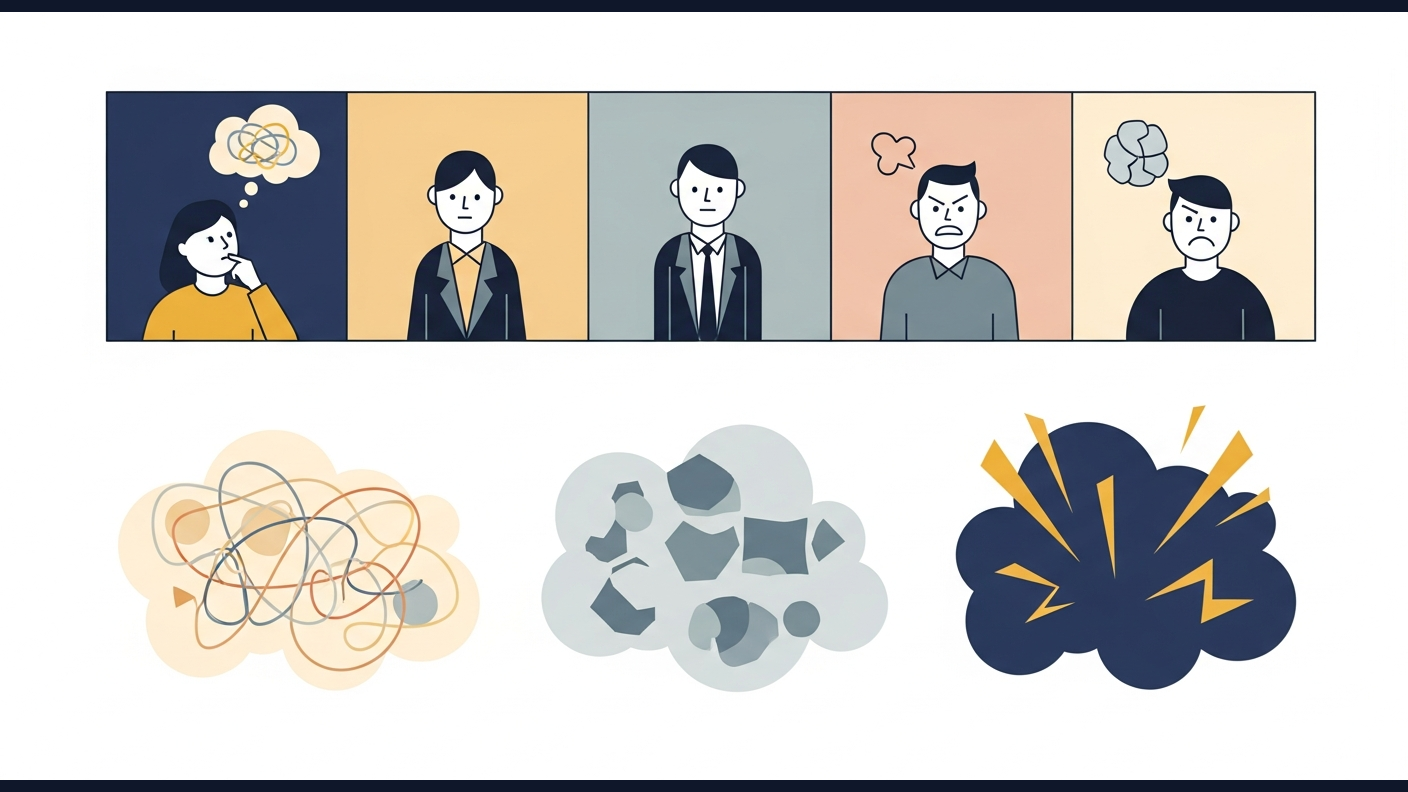
‘Communicative silence’ is one of the most misread signals in cross cultural business. Research by Hayati et al. (2024) found that in high context cultures like Japan and China, professional silence is typically read as reflective and respectful, while in low context cultures like the United States, the same pause gets interpreted as confusion or resistance.
A familiar pattern in global meetings: a manager asks a question, nobody speaks, and the manager fills the gap within three seconds by rephrasing or moving on. The silence lasted maybe as long as it takes to draw a breath, and it probably carried more useful information than the next ten minutes of that meeting.
Global managers spend a lot of energy reading what people say. We track sentiment in follow up emails, debrief after alignment calls, and wonder why the Tokyo office isn’t executing on what everyone agreed to last Tuesday. In many cross cultural settings, the most important message arrives less through words and more in the pause after the question, the careful neutrality of tone, the answer that technically says yes but somehow doesn’t.
What ‘communicative silence’ actually means
Researchers call this ‘communicative silence,’ and the framing matters. Silence means different things depending on where you learned to communicate professionally, more than it reflects whether some cultures are simply quiet.
A 2024 study on silence in digital cross cultural communication by Hayati et al. found that in high context cultures like Japan and China, professional silence is typically read as reflective and respectful. In low context cultures like the United States, the exact same silence tends to be interpreted as confusion, resistance, or disengagement.
The digital meeting environment makes this worse. Hayati et al. (2024) found that the absence of nonverbal cues in virtual settings exacerbates these misunderstandings because there is nothing left to read besides the gap itself. Every remote global meeting is running this risk, and most teams have no protocol for handling it.
The silence after your question is data, more than awkwardness. The question is whether your meeting culture is built to hear it.
Why the simple framework breaks down
The instinct is to reduce this to one rule: high context cultures go quiet, low context cultures speak up. The research shows something more textured.
Knoll et al. (2021) studied silence motives across 33 countries and found four distinct reasons people stay quiet at work: fear, resignation, prosocial concern, and self interest. The relationships between these motives and cultural dimensions like power distance and uncertainty avoidance were, in their words, “more complex than commonly assumed.”
In high power distance contexts, silence driven by fear is more prevalent. This is worth sitting with. When someone doesn’t speak up in your meeting, they might not be disengaged or confused. They might have done a rapid calculation about whether the risk of speaking is worth the benefit, and the culture of the room told them it wasn’t.
Four things worth trying
Stop filling the silence so fast. Edmondson et al. (2021) distinguish between ‘withholding’ (choosing not to share something relevant) and ‘processing’ (taking time to formulate a genuine response). Most managers treat all silence as withholding and jump in after two seconds. A lot of that silence is actually processing, and filling it before anyone has finished thinking means you’ll never know the difference.
Create the low stakes side channel. For colleagues from high context or high power distance backgrounds, the open meeting floor is often the hardest place to raise a concern. A bilateral conversation before the meeting, a written pre read request, or a simple “let me know if anything surfaces after you’ve had time to think” can produce more real alignment than thirty minutes of roundtable discussion.
Learn to read the texture of the pause. This is harder to systematize but worth developing. Processing silence usually comes with continued attention and sometimes a visible shift in posture. Disagreement silence often has a slightly different quality: a careful, controlled stillness. Managers who work across cultures long enough start to feel this distinction, and it’s worth paying attention to. Shortening how long that takes is most of what a cross cultural consultant is for.
Ask about the post meeting, not just the meeting. In many high context environments, the real response to a decision happens after the room clears, in smaller conversations that weren’t part of the official discussion. Designing space for those conversations is the difference between getting full information and getting half of it. Ask directly: “How did your team respond when you had a chance to think it through?” You will learn a lot.
What this comes back to
There’s a version of global meeting culture where everyone feels safe enough to say the difficult thing in the room. That’s worth working toward. In the meantime, learning to actually listen to silence is faster and probably more honest as a starting point. The most important signal in your next global meeting might not come from anyone who speaks.
What’s your experience with this? Is silence in your global meetings something you’ve learned to read, or does it still mostly feel like a gap you need to fill?
I also wrote about what happens when proposals die before the meeting even starts, which gets at the other side of this problem: the decisions that get made in the conversations nobody invites you to.
Frequently Asked Questions
Q: Why do some cultures stay silent in meetings while others speak up freely?
The cause runs deeper than personality. Hayati et al. (2024) found that in high context cultures like Japan and China, professional silence is typically read as reflective and respectful, while in low context cultures like the United States the exact same silence tends to be interpreted as confusion or disengagement. These are learned communication norms more than character differences.
Q: Does remote work make cross cultural silence harder to read?
Yes, significantly. Hayati et al. (2024) found that the absence of nonverbal cues in virtual settings makes these misunderstandings worse, because there is nothing left to interpret besides the gap itself. When you cannot see body language, a processing pause and a disagreement pause look identical.
Q: Is silence in meetings always about cultural background?
Not entirely. Knoll et al. (2021) studied silence motives across 33 countries and found four distinct reasons people stay quiet at work: fear, resignation, prosocial concern, and self interest. The relationships between those motives and cultural dimensions were, in their words, “more complex than commonly assumed,” which means a single framework won’t tell you what any specific silence means.
Q: How can managers tell if someone is still thinking versus choosing not to speak?
Edmondson et al. (2021) distinguish between ‘withholding’ (choosing not to share something relevant) and ‘processing’ (taking time to formulate a genuine response). Most managers treat all silence as withholding and fill it within two seconds. Waiting longer and designing pre meeting or post meeting check ins is the most reliable way to find out which one you’re dealing with.
We work with global teams on exactly this at Peak Potential. Our cross cultural leadership services help teams build the skill to read these signals in real time, more than just learn about them in a workshop. If your organization is navigating this, let’s talk.
I also wrote about why most cross cultural training doesn’t work and the false alignment problem that shows up when global teams can’t read each other’s signals.
Sources
- Hayati, D. et al. (2024). Decoding Silence in Digital Cross-Cultural Communication. Language, Technology, and Social Media.
- Knoll, M. et al. (2021). International differences in employee silence motives. Journal of Organizational Behavior.
- Edmondson, A. et al. (2021). Reflections: Voice and Silence in Workplace Conversations. Journal of Change Management.

by Jay Vergara
Partner, Lead Learning Consultant at Peak Potential Consulting
L&D strategist and cross cultural communication specialist helping organizations build leaders, teams, and learning cultures that work across borders. Currently pursuing his MBA at GLOBIS University in Tokyo.