Why Your Cross Cultural Training Isn't Working (and What the Research Actually Says)
Most cross cultural training teaches facts about countries. The research says the real gap is something else entirely, and it changes how you build global teams.
By Jay Vergara
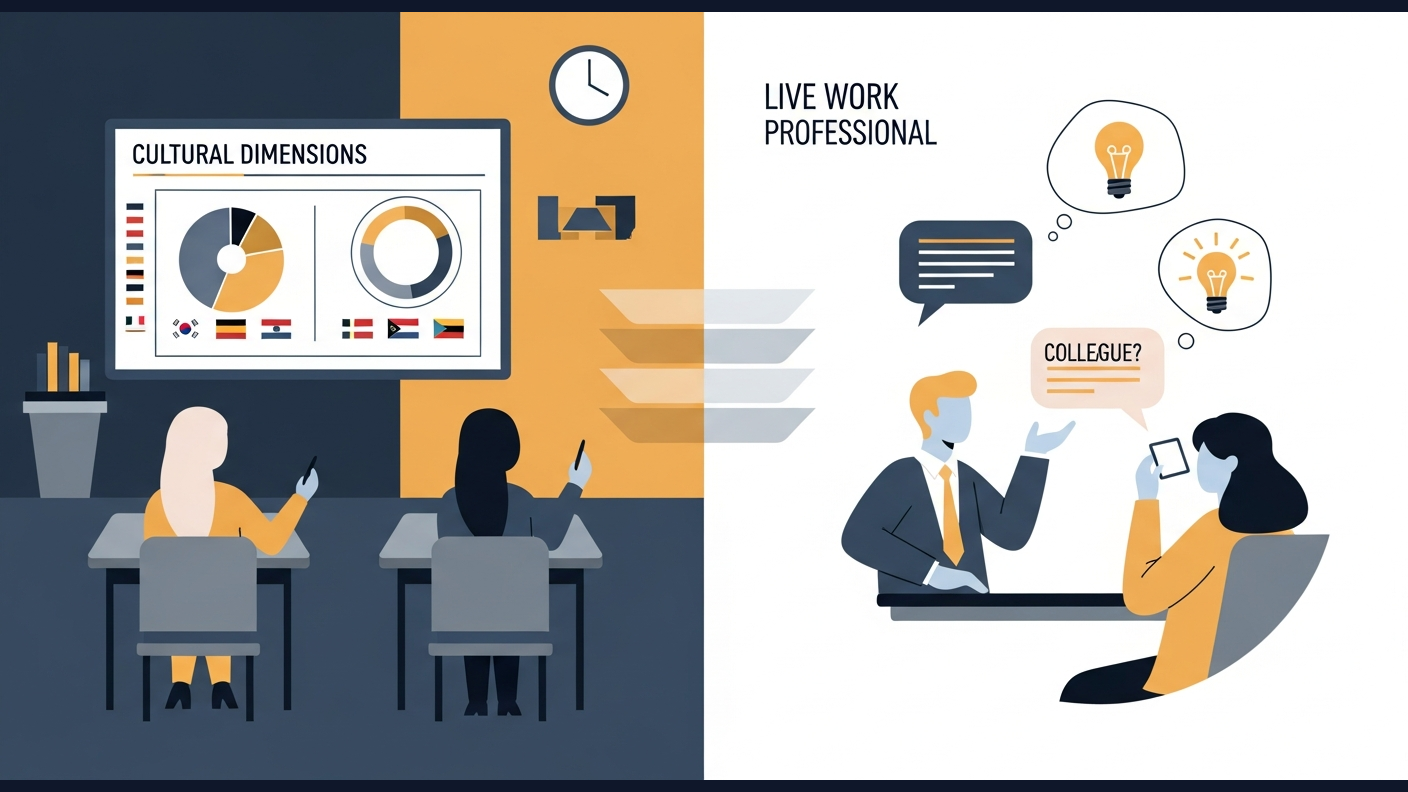
Cross cultural training fails to change behavior when it teaches knowledge about cultural differences rather than the behavioral skills required to adapt in real time. A review by Gelfand et al. (2007) found that most programs focus on values as the explanation for cultural differences while ignoring the social and organizational context that actually shapes how people behave.
If cross cultural training actually worked the way most companies deliver it, the same miscommunications wouldn’t keep happening. A company invests in the program. Employees learn about Hofstede’s dimensions, maybe watch a few videos about business etiquette in different countries. Everyone gets a certificate and the feedback forms say it was helpful. Monday rolls around and the Tokyo team is still confused by the directness from New York, and New York is still frustrated by the silence from Tokyo. The same misunderstandings, the same meetings, the same teams. It’s almost impressive how little changes.
The complaint that never gets said out loud
The surface level version sounds like a communication problem. “They don’t speak up in meetings.” “They agreed but nothing happened.” “The Tokyo office and the New York office are just not aligned.”
The actual issue is more specific. Most global professionals in 2026 have some awareness that cultures communicate differently. Knowing about ‘cultural dimensions’ doesn’t actually change how you behave in the moment when it matters.
Consider a meeting. Your colleague in Tokyo asks a very specific clarifying question about the timeline. In a low context communication culture, that is just a question. In a high context one, that question might be the most polite way of saying “I have serious concerns about this entire plan but I’m not going to say that in front of twelve people.”
If nobody in the room can read that difference in real time, all the Hofstede training in the world isn’t going to help you.
What the research keeps pointing to
A review by Gelfand et al. (2007) in the Annual Review of Psychology found something most organizations still haven’t internalized.
Most cross cultural research and training focuses on ‘values’ as the explanation for cultural differences. The framing fails to account for the social and organizational context that actually shapes how people behave.
In plain language: teaching someone that Japan is a ‘high context culture’ gives them a label. The label doesn’t give them the skill to notice when a polite question is actually a disagreement. Those are completely different things, and most training programs treat them like they are the same.
The researchers specifically call for moving “beyond values to explain cultural differences.” That shift is everything.
The gap nobody’s training for
A study by Matveev and Nelson (2004) of 124 American and Russian managers in multicultural teams looked at the relationship between ‘cross cultural communication competence’ and team performance.
The finding wasn’t surprising in shape. Competence directly affects performance. The detail that matters is how the researchers defined competence. The competence they measured was about real time adaptation, more than factual recall about other cultures. The behavioral dimension of actually adjusting how you interact based on who you’re working with.
Most cross cultural training fills the cultural knowledge gap and barely touches the cultural skill gap. The two aren’t substitutes for each other.
Adding to the difficulty, national culture significantly affected how managers perceived communication competence in the first place. The starting point is different for every person on your team. A training program that treats everyone the same misses this entirely.
What actually moves the needle
A 2024 study by Erfan across multiple multinational corporations found that cross cultural training did improve collaboration and reduce misunderstandings, but only when two specific conditions were met.
First, the training had to be paired with leadership that actually modeled ‘cultural intelligence,’ more than just endorsed it. Second, the organization needed policies that reinforced what was taught. Training alone, without those two things, produced minimal lasting change.
The most important person in cross cultural training is often the manager, more than the participants. (Which makes things harder, not easier.)
Where to start
Move from knowledge to skill. The research is consistent on this. Country profiles and dimension scores don’t change behavior. Practice scenarios, role plays, and debrief conversations after real interactions do, which is why a working session with the actual team beats a course every time. If your training is mostly PowerPoint slides about cultural values, that’s probably why nothing’s changing.
Train the managers first. If the person leading the multicultural team doesn’t model cultural intelligence, the training won’t stick regardless of how good it is. The 2024 research found culturally intelligent leadership was one of the strongest predictors of whether cross cultural practices actually improved performance. Start there.
Make it structural rather than only educational. Cross cultural training that exists as a standalone event fades fast. Embed it into team norms, meeting protocols, how feedback gets given. The research keeps showing that context matters as much as content.
The part that sticks with me
Most organizations have a skill problem dressed up as a knowledge problem. They keep trying to solve it by adding more knowledge to a domain that doesn’t lack for it.
If your team works across cultures and the training hasn’t changed much, it might be worth asking what the program is actually building. ‘Cultural awareness’ and ‘cultural competence’ sound similar, and the research is pretty clear about which one moves the needle.
If you’re interested in what those untranslatable moments actually look like in practice, I wrote a piece on the words that don’t translate and why they’re the real cultural keys. It gets at exactly this gap between knowing about a culture and actually navigating it.
Frequently Asked Questions
Q: Why doesn’t traditional cross cultural training actually change behavior?
Gelfand et al. (2007) found that most cross cultural research and training focuses on values as the explanation for cultural differences but fails to account for the social and organizational context that actually shapes how people behave in the moment. Teaching someone that Japan is a ‘high context culture’ gives them a label, while the skill to recognize when a polite question is actually a disagreement is something the label doesn’t provide.
Q: What’s the difference between cultural awareness and cultural competence?
Cultural awareness is knowing facts about how cultures differ. Cultural competence is the ability to adapt your communication style in real time based on who you’re working with. Matveev and Nelson (2004) studied 124 American and Russian managers in multicultural teams and found that the behavioral dimension of competence (more than factual knowledge) directly predicts team performance.
Q: Does cross cultural training ever actually work?
Yes, under specific conditions. Erfan (2024) found that cross cultural training improved collaboration and reduced misunderstandings across multiple multinational corporations, but only when paired with leadership that actively modeled ‘cultural intelligence’ and organizational policies that reinforced what was taught. Training alone, without those two things, produced minimal lasting change.
Q: Who is the most important person in a cross cultural training program?
Often the manager, more than the participants. The 2024 Erfan research found that culturally intelligent leadership was one of the strongest predictors of whether cross cultural practices actually improved performance. If the manager leading the multicultural team doesn’t model cultural intelligence, the training won’t stick regardless of how good it is.
We build cross cultural leadership programs around exactly this at Peak Potential, using the Intrivity MRTS Assessment to profile how each leader actually communicates rather than relying on country stereotypes. If you’re curious what that looks like in practice, let’s talk.
If you want to see how these dynamics show up in meetings specifically, I wrote about what the silence in your global meetings is really saying and why your global team thinks they’re aligned when they aren’t.
Sources
- Gelfand, M. et al. (2007). Cross-cultural organizational behavior. Annual Review of Psychology.
- Matveev, A. et al. (2004). Cross Cultural Communication Competence and Multicultural Team Performance. International Journal of Cross Cultural Management.
- Erfan, M. (2024). The Impact of Cross-Cultural Management on Global Collaboration and Performance. Advances in Human Resource Management Research.

by Jay Vergara
Partner, Lead Learning Consultant at Peak Potential Consulting
L&D strategist and cross cultural communication specialist helping organizations build leaders, teams, and learning cultures that work across borders. Currently pursuing his MBA at GLOBIS University in Tokyo.